
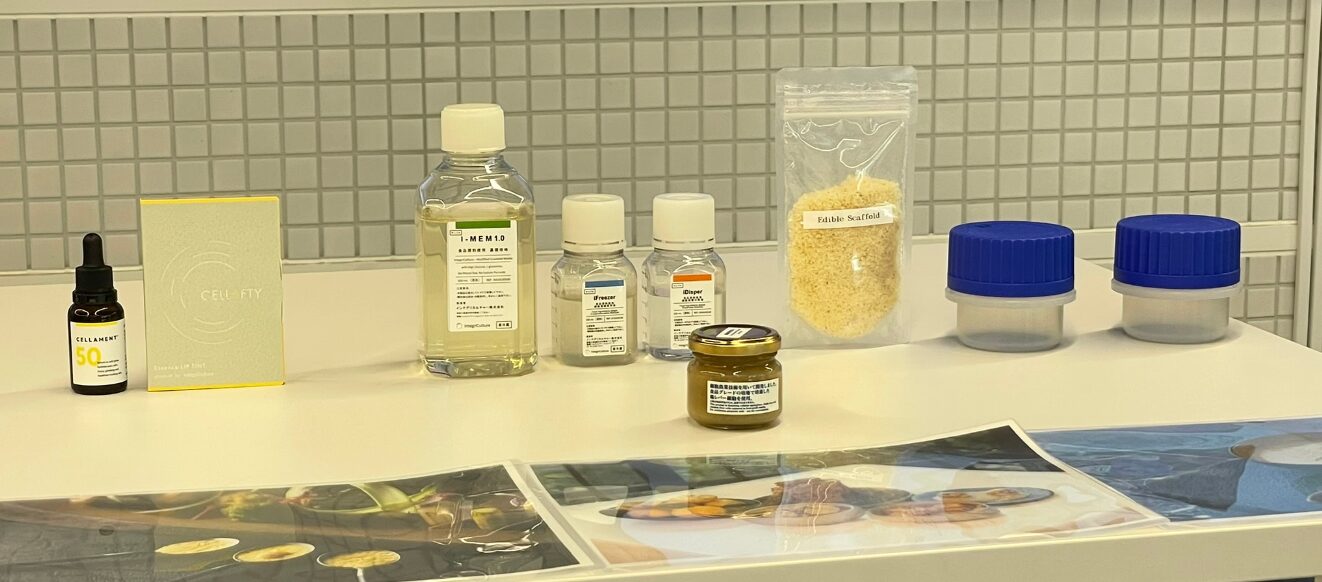
Photo: Foovo (Ayumi Sato).
Integriculture announced on March 30 that it had entered into a joint development agreement with Oisix ra daichi (hereafter, Oisix) in January 2026.
At the same time, the company also announced that, in order to further strengthen the partnership between the two firms, it had joined the “Niigata Food Tech Town” initiative last month, which is promoted by Oisix and the NSG Group.
By combining Oisix, which has direct consumer touchpoints through its food subscription service, with Integriculture, which operates a cell cultivation platform, the two companies aim to create cell-based foods with “a story unique to Niigata” by leveraging local resources such as Niigata’s renowned water and agricultural products.
The two companies plan to advance development of Niigata-branded cell-based foods during 2026, and are expected to finalize a concrete development schedule in April. Under the joint development project, Integriculture will be responsible for prototype sample production and evaluation of cell-based foods, while Oisix will handle menu development as well as product prototyping and evaluation.
Integriculture targets regional revitalization after achieving profitability
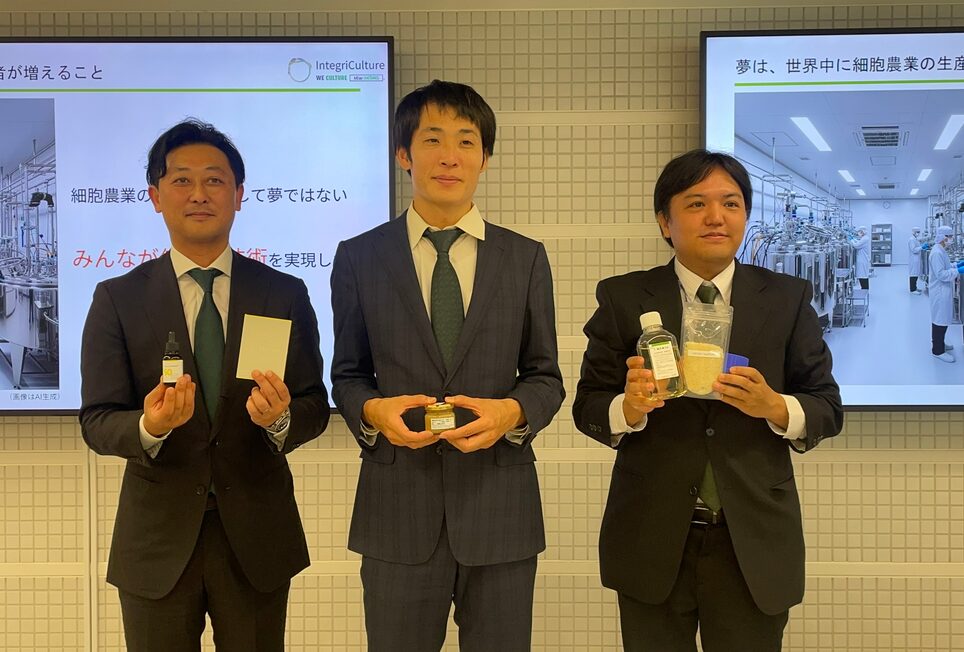
Founded in 2015, Integriculture has been working to build the foundation needed for the social implementation of cellular agriculture.
The company has developed its own cross-industry solutions, including the open-innovation “CulNet Consortium,” which had 19 participating companies as of September 2025; “CulNet Pipeline,” which supports new corporate entrants into the field; and “Ocatté Base,” a B2B marketplace that provides materials and know-how.
In addition to conducting joint research on cell-based surimi with Ichimasa Kamaboko and Maruha Nichiro, the company also signed a strategic partnership with Sumitomo Riko last month with the aim of filing in Singapore within this year.
After achieving annual profitability in its fiscal year ending September 2025, the company’s next goal is to develop cell-based foods that “start locally,” linking regional water and existing industries such as sake breweries, based on its findings that differences in water can lead to distinct cellular characteristics.

Oisix ra daichi, meanwhile, has maintained direct consumer touchpoints through delivery services such as Radishbo-ya, while also advancing food-tech investments through its Future Food Fund, launched in 2019, and has invested in Integriculture as well. In 2024, it unveiled the Niigata Food Tech Town initiative, and from last month began preparations to establish a new degree program at the Niigata University Graduate School.
The project between the two companies is drawing attention as a model that links cell-based foods not only to sustainable food production but also to regional revitalization.
Globally, following Singapore in December 2020, cell-based foods have been sold in the United States, Australia, and Hong Kong, and when including pet food applications, also in the United Kingdom as well.
In Japan, discussions are underway at the Consumer Affairs Agency’s “Food Sanitation Standards Council, Subcommittee on Newly Developed Foods on the development of guidelines for cell-based foods.
In materials dated March 30, 2026 submitted to the subcommittee, Integriculture stated that the manufacturing line it has installed at Shonan iPark has reached “a stage where commercial-scale production is also possible.” It added that it is conducting stable production trials and accumulating data on a schedule that could enable commercialization on April 1, 2027, and identified that date as the point at which the product would be “in a condition suitable for sale as an ingredient.”
Although Japan’s regulatory framework is still under development, this latest move is noteworthy as a new cell-based food initiative tied to regional revitalization.
This article is an English translation of a Foovo article originally published on April 1, 2026, and is published with permission from Foovo.
You may also LIKE: