
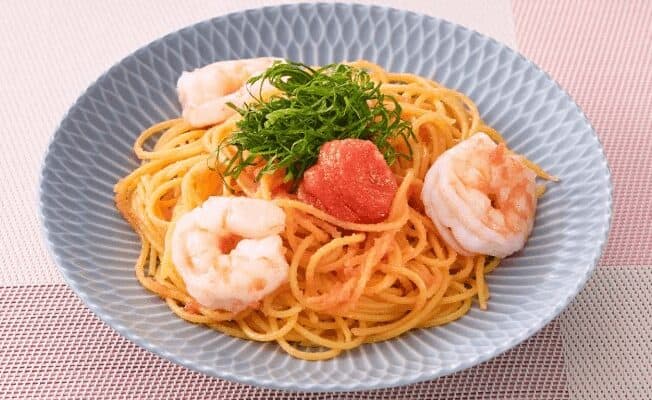
Source: Yamaya
As the development of alternative seafood products such as plant-based eel and tuna accelerates in Japan, a major producer of mentaiko, or spicy seasoned fish eggs, is entering the alternative seafood market.
Mentaiko maker Yamaya has spent around five years developing “Daitai Mentai (“Almost Mentaiko” in Japanese),” a fish roe-free product designed to replicate the distinctive grainy texture and taste of real mentaiko. The company unveiled the product for the first time at the Japan International Seafood & Technology Expo held last month.
Yamaya plans to offer the product for foodservice use at an expected price of around JPY 1,200–1,300 per kilogram.
Reproducing Mentaiko’s Distinctive Grainy Texture Without Fish Roe
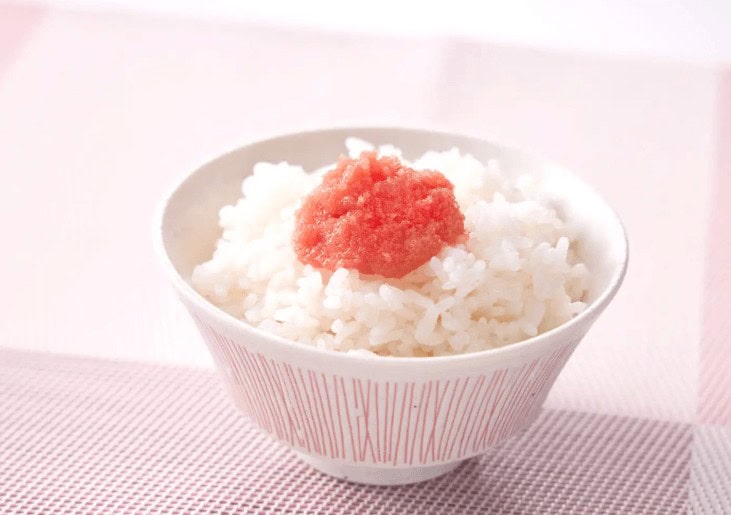
According to Yamaya, mentaiko can be difficult to use in hospital meals and home-delivered meals for older adults because of concerns over salt content, even though there is demand from people who still want to eat it. The company also decided to develop an alternative in response to changes in the environment surrounding fish roe, rising prices, and the possibility of future supply risks.
The product uses an alternative roe developed jointly with another manufacturer to reproduce the characteristic granular texture of mentaiko. The alternative roe is made from processed starch products.
For flavor, Yamaya uses the seasoning liquid it has developed and refined since the company was founded, which it says is essential to the taste of mentaiko. The seasoning liquid, however, contains an extract derived from fish roe.
According to the company, one of the biggest challenges during development was reproducing the unusually small size of mentaiko roe. Unlike salmon roe, each individual mentaiko egg is very small. Yamaya said the most difficult part was creating a perceptible granular texture in the mouth while keeping the particles small.
The company focused on both particle size and texture so that the granules would remain noticeable even when eaten with rice. If the particles are too large, it looks artificial; if they’re too small, it loses the texture of the ingredients. Yamaya produced and tested multiple samples with different particle sizes before arriving at the current format.
In addition, they deliberately made the texture slightly firmer than that of real mentaiko so that it would have a satisfying chew even when eaten with rice.
The product was also designed for consumers concerned about cholesterol as well as salt intake. Mentaiko contains cholesterol, although less than chicken eggs. “Daitai Mentai” contains no cholesterol and has around half the salt content of Yamaya’s conventional mentaiko products.
Alternative Mentaiko Already Exists, but Could a Major Player Expand the Market?
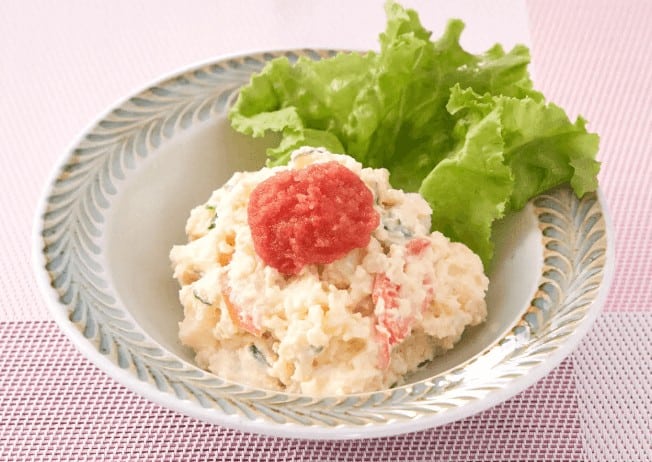
Efforts to reproduce mentaiko without using fish roe are not entirely new.
Deats Food Planning already offers “Deats Mentaiko Type V,” a fish roe-free product for foodservice applications, while Mannan Meal Company provides “Mannan Mentaiko Base,” which uses konjac.
In August 2024, Kewpie launched a pasta sauce that recreates the flavor of pollock roe using ingredients such as vegetable oils and processed starch products. The company has also obtained a patent for a method of manufacturing alternative fish roe products intended to replace pollock roe, mentaiko, and salmon roe.
Yamaya’s move is notable because a major company specializing in mentaiko has spent around five years developing an alternative without compromising on taste, while also targeting the reduced-sodium, medical, and senior-friendly food markets.
Japan’s plant-based seafood market is projected to grow by 28.91% between 2026 and 2034. Until now, alternative seafood products in Japan have mainly focused on recreating fish meat such as eel, tuna, and salmon.
Azuma Foods has sold alternatives to salmon, tuna, and squid under its “Marude Sakana (“Just Like Fish” in Japanese)” series since 2021.
Nissin Foods successfully developed a plant-based eel product in May 2023 and launched its “Nissin Nazo Unagi Don” cup rice product the following year. In July this year, the company released an improved version with enhanced flavor.
Karuna also began selling plant-based tuna and eel products through its e-commerce site and to restaurants in July.
Last month, Kanetetsu Delica Foods announced “Hobo Tako (“Almost octopus” in Japanese)” , a product designed to replicate octopus without using octopus.
With a major manufacturer now entering the alternative fish roe category as well, the move could further expand Japan’s alternative seafood market.
This article is an English translation of a Foovo article, published with permission from Foovo.