
Source: Ajinomoto
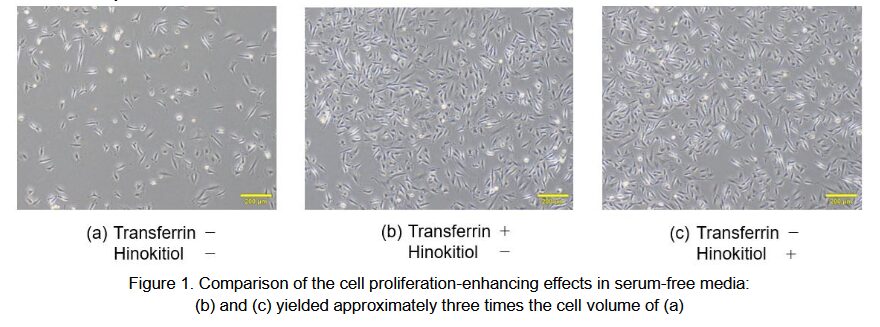
Ajinomoto announced on April 16 a new technology for manufacturing cultivated meat that maintains high cell proliferation using plant-derived hinokitiol, without relying on conventional serum components.
The company has successfully replaced transferrin—a component of serum that is expensive and difficult to produce—with the plant-derived compound hinokitiol. Verification using prototypes has already been completed, and the company aims to bring the product to market within a few years.
Replacing Transferrin, a Major Factor in Medium Costs
According to the ISCCM abstract, cultivated meat have not yet reached a point where they can be offered at affordable prices due to the supply and cost of serum-free culture media, particularly the high costs of transferrin, insulin, and growth factors.
Ajinomoto has been conducting research to replace substances like transferrin with alternatives while maintaining their efficacy. The company focused on transferrin, which is both expensive and has a large market size. In cell culture, transferrin is involved in the transport of iron ions to cells.
The company focused on hinokitiol, a naturally derived ingredient that delivers iron ions to cells and is listed on Japan’s existing food additive list.
Ajinomoto established a cell proliferation evaluation system using immortalized bovine satellite cell lines and evaluated the effects of adding hinokitiol to serum-free culture medium. The results confirmed that hinokitiol functions as a substitute for transferrin.
According to the press release, while transferrin—a macromolecule—is prone to quality variations with each batch, hinokitiol is a small molecule that is chemically stable and has been confirmed to be safe for human consumption.
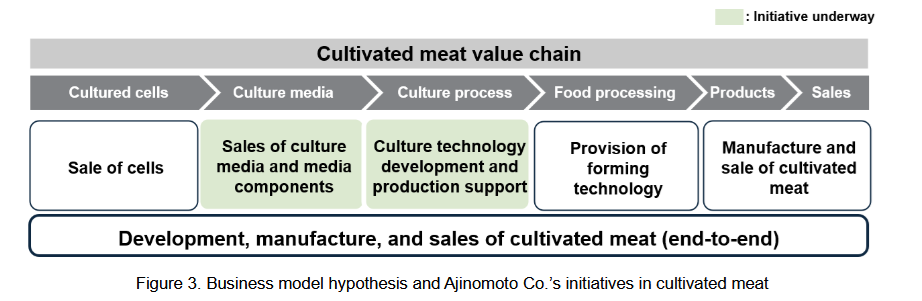
The value chain for cultivated meat spans a wide range of areas, including cells, culture media, cultivation processes, processing, and manufacturing and sales. Ajinomoto plans to first leverage the technology and expertise cultivated through its biopharmaceutical and regenerative medicine culture medium businesses to enter the market for culture media and cultivation processes.
The cost of culture media is a factor driving up the manufacturing costs of cell-based foods, and Ajinomoto’s plant-derived culture medium components have the potential to accelerate the commercialization of cell-based foods.
Domestic cultivated meat Expanding from Culture Media, Structuring, to Regulatory Framework
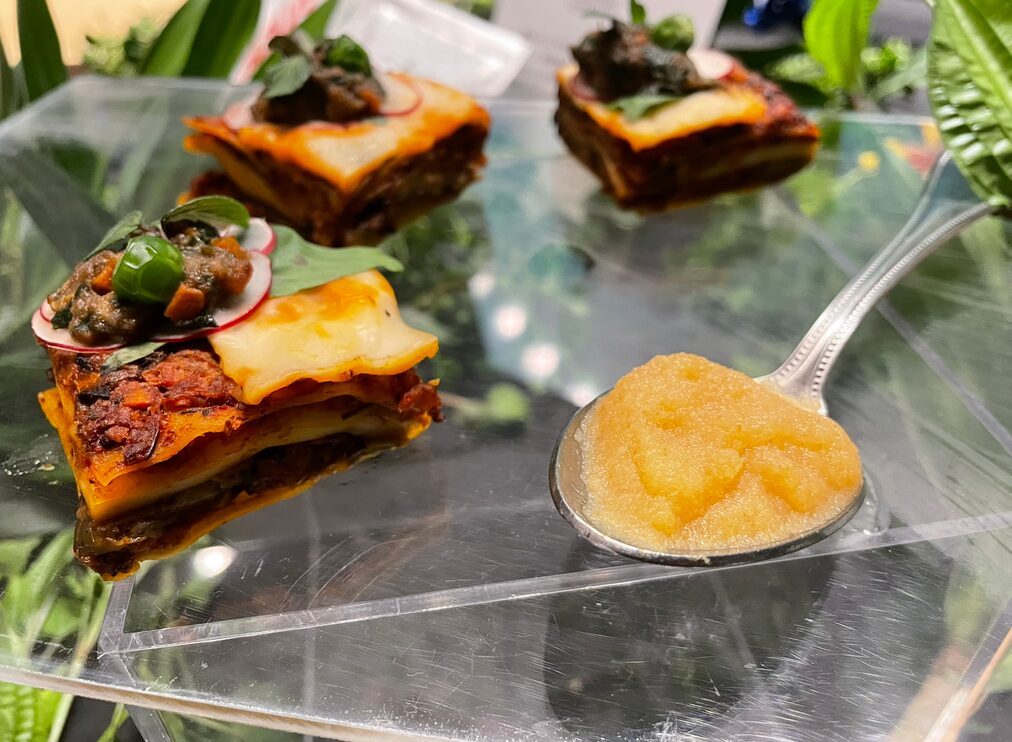
In Japan, research and development of cultivated meat is expanding from cells, culture media, and cultivation processes to structuring and regulatory framework development.
In 2025, Professor Shoji Takeuchi of the University of Tokyo and his team announced a method using hollow fibers to deliver nutrients deep into the interior of thick cell-based chicken meat. Kitasato University and other research groups have successfully established a cell line that produces the fats responsible for the flavor and texture of Japanese eel.
On the corporate side, IntegriCulture is advancing joint research on cell-based fish paste with Ichimasa Kamaboko and Umios (formerly Maruha Nichiro), and has also partnered with Tsunan Brewery in Niigata to create cell-based foods that highlight regional characteristics. Additionally, through a partnership with Sumitomo Riko, the company aims to submit an application for approval to Singaporean authorities within the year.
Diverse Farm, which is developing cell-based chicken meat, is planning to expand its manufacturing technology on a B2B basis to Singapore, Australia, and other countries with the aim of early commercialization.
Organoid Farm conducted a cultivation demonstration of bovine muscle cells on a 200-liter scale, one of the largest in Japan.
The Food Tech Public-Private Council published guidelines for the labeling of cell-based foods in March, and the Consumer Affairs Agency is currently engaged in discussions to develop guidelines for foods produced through cell cultivation.
This article is an English translation of a Foovo article originally published on May 7, 2026, and is published with permission from Foovo.
You may also LIKE:
Integriculture and Oisix ra daichi Partner to Joint Develop Niigata-Branded Cell-Based Foods