
Source: Prime Minister’s Office
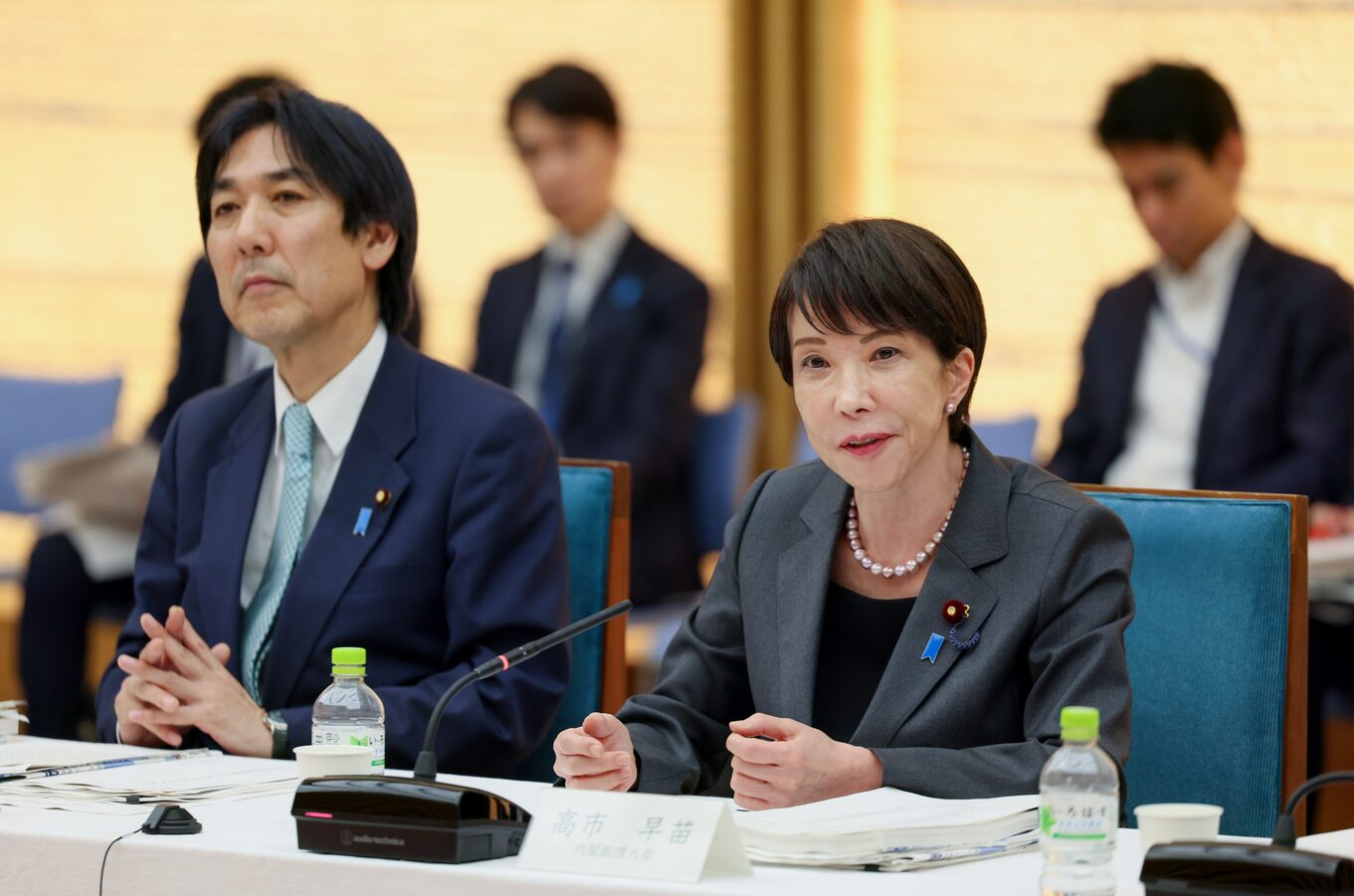
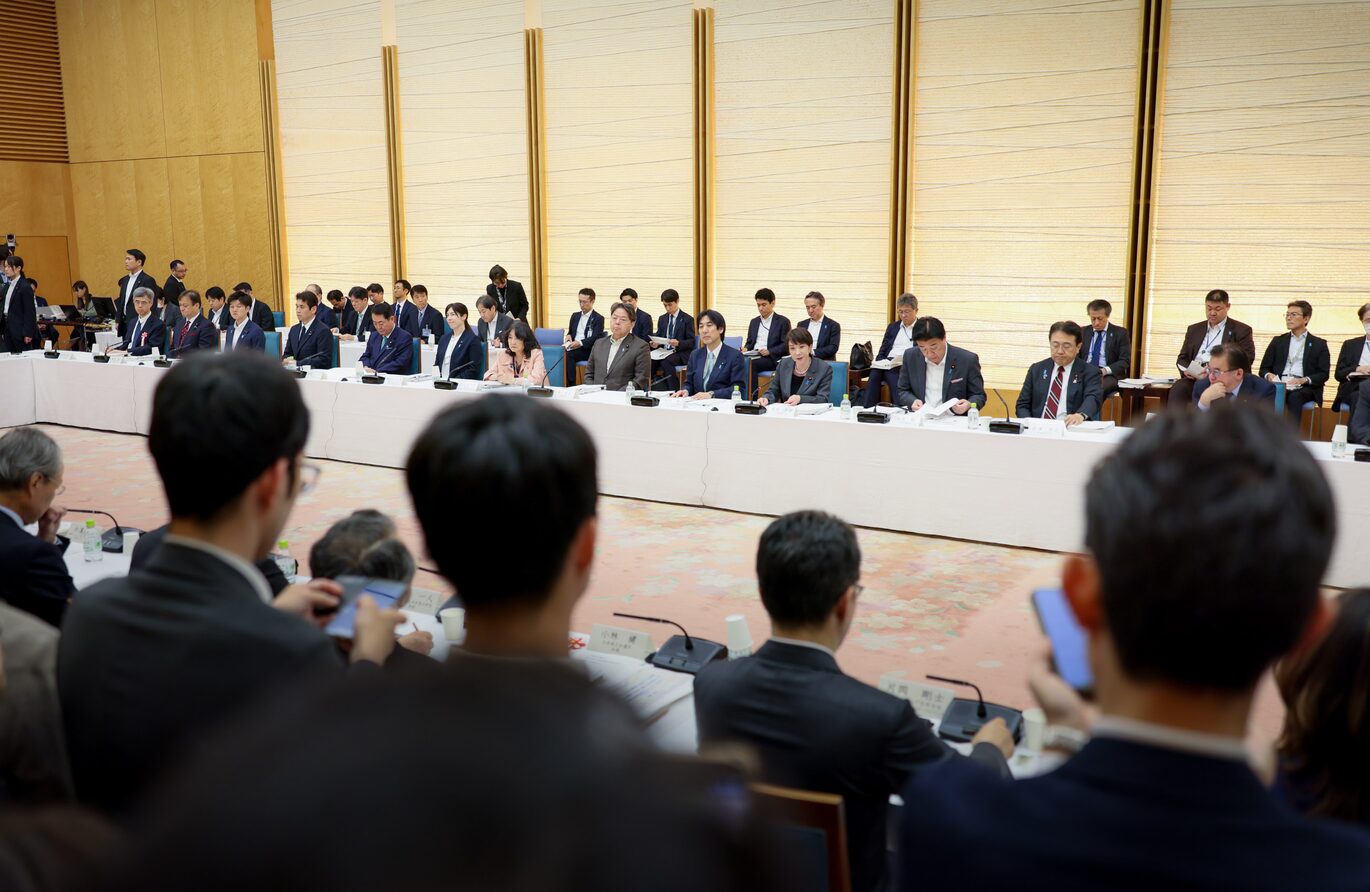
Japanese government unveiled a draft public-private investment roadmap for 17 strategic sectors on June 24, at a joint meeting of the Japan Growth Strategy Council and the Council on Economic and Fiscal Policy.
The plan projects cumulative public-private investment of more than $2.29 trillion (370 trillion yen) across these 17 sectors by fiscal year 2040.
In the four food tech sectors—Indoor farming account for about $28.4 billion (4.6 trillion yen), land-based aquaculture about $17.9 billion (2.9 trillion yen), food machinery for about $7.4 billion (1.2 trillion yen), and new food products for about $6.2 billion (1 trillion yen)—bringing the total to approximately $60 billion (9.7 trillion).
Minister of Agriculture, Forestry and Fisheries Norikazu Suzuki stated at a press conference on the 26th that, regarding the 9.7 trillion yen in public-private investment, it is important to prioritize investment targets, and that a multifaceted evaluation—encompassing not only technical aspects but also management abilities, global orientation, and professional networks—is essential. He noted that the specific methods for selecting companies to support and technologies to promote will be further discussed in the future.
Regarding Indoor farming, the government outlined a policy to expand the range of commercially cultivated crops—currently limited to leafy vegetables—in response to market demand and to roll out the “Indoor farming system” overseas that combines agricultural products, Indoor farming, and operational know-how. The goal is to capture a 30% share of domestic and international markets by 2040 (Draft Roadmap page 280, 283; the same applies below).
Land-based aquaculture will involve the deployment of modular systems both domestically and internationally, targeting not only large-scale salmon farming but also species such as yellowtail, tiger pufferfish, groupers, and eels. Development of fish seed and feed utilizing algal fermentation and genome-related technologies will also proceed, with the goal of achieving a 30% share of the global market by 2040 (page 288).
In the food machinery sector, Japan will expand its overseas presence through measures to support compliance with international regulations and the acquisition of certifications required for exports—tasks that are difficult for individual companies to handle alone—as well as through the establishment of international standards led by Japan. Freshness-preservation technology is viewed as a catalyst for expanding exports of food and fresh produce, with the goal of achieving 3 trillion yen in sales in domestic and international markets by 2040 (page 293).
New Foods include non-animal-derived protein foods and functional and nutritional foods. Cell-based foods (such as cultured meat) were not cited as examples. Leveraging Japan’s strengths in fermentation and seasoning technologies, Japan plans to expand primarily into health- and environmentally-conscious markets in Europe and the United States through 2030, then extend into Asia, aiming for 3 trillion yen in sales in domestic and international markets by 2040 (page 295, 298).
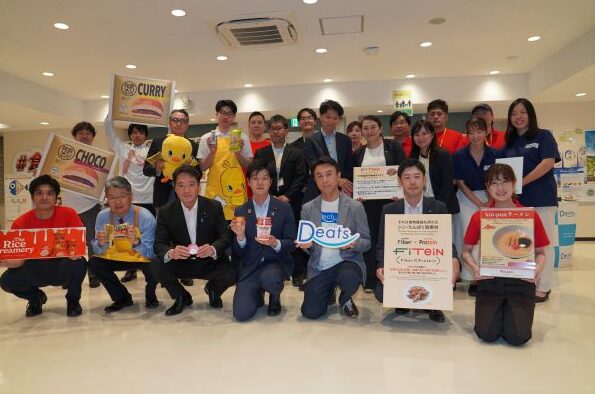
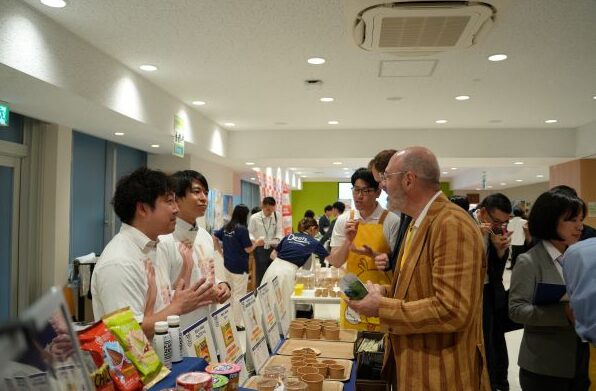
Prior to this, on June 22, the Ministry of Agriculture, Forestry and Fisheries (MAFF) held a tasting event for food tech-related products (see photo below) for ministers and officials from various embassies, with the aim of expanding demand for new foods. Domestic companies such as Kinish and Dits Food Planning introduced foods that do not use animal-derived ingredients.
Additionally, at the general meeting of the Public-Private Council on Food Tech held this month, two new working groups were launched: the Fermentation-Derived Food Working Group and the Freshness Preservation Technology Working Group.
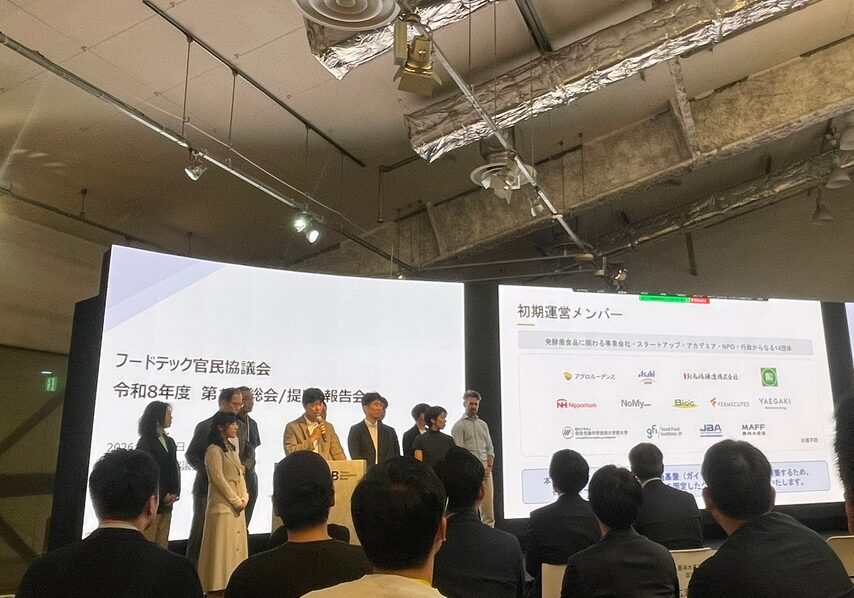
Fermentation-Derived Food Working Group aims to promote the widespread adoption of new food ingredients utilizing koji and mushroom mycelium by discussing issues such as labeling, safety, and consumer understanding. Freshness Preservation Technology Working Group plans to utilize freezing, packaging, and vacuum technologies to reduce food loss and expand exports.
Prime Minister Sanae Takaichi, following the finalization of the draft public-private investment roadmap on the 24th, referred to the “Strategic Industrial Cluster Plan”—which is based on large-scale investments related to 17 strategic fields—and stated, “We will proceed boldly with this plan using a separate budget from existing allocations.”
She also touched on the “Regional Industrial Cluster Plan,” led by prefectural governments, and announced that next month would see the first round of announcements regarding strategic industrial cluster plans—covering semiconductors, next-generation ships, rockets and launch sites—as well as regional industrial cluster plans for food processing, hydrogen, and storage batteries.
This article is an English translation of a Foovo article, published with permission from Foovo.